Laundry Cabinet: DIY Plans with Dimensions and Assembly
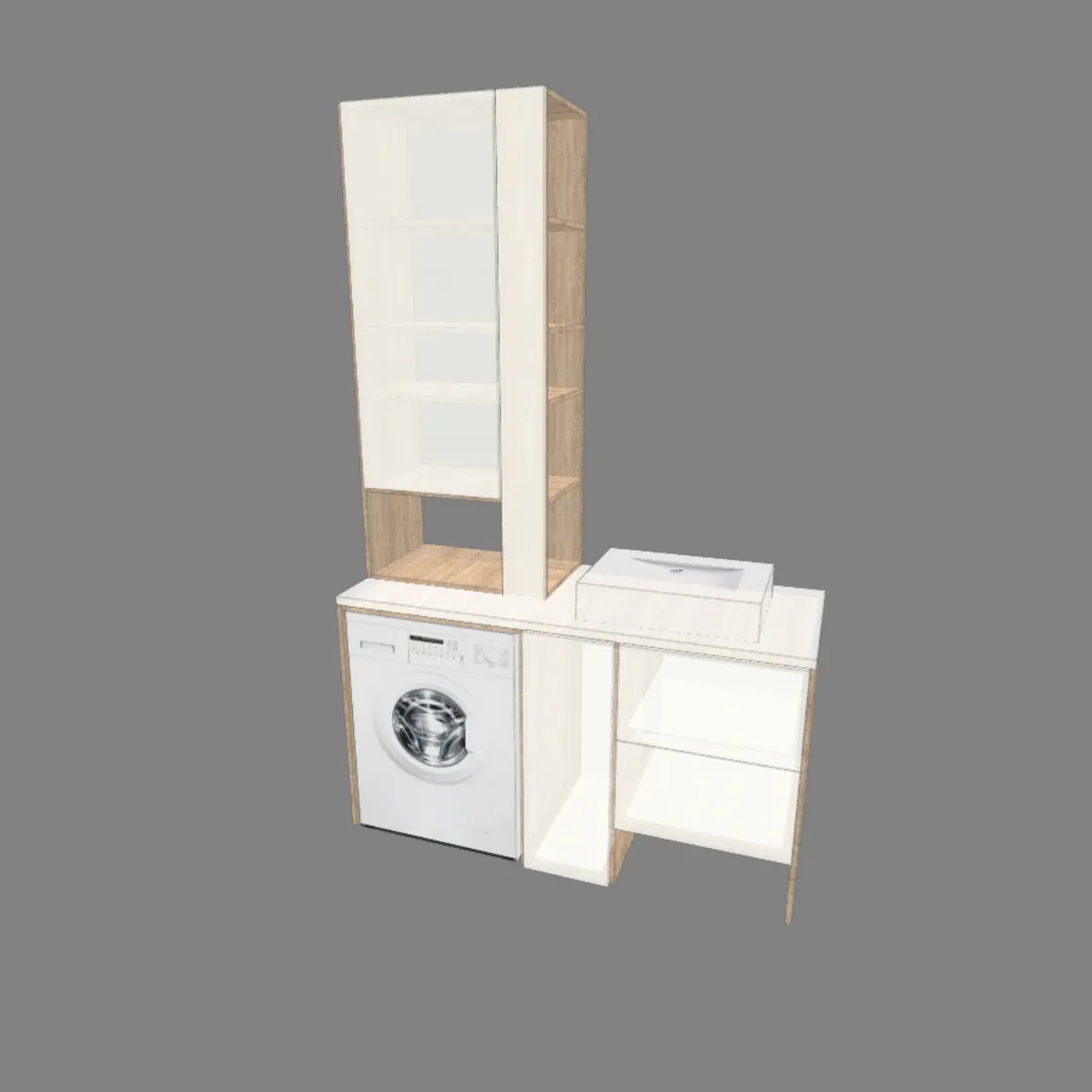
Interactive 3D model: rotate to inspect, open in designer to customize
This project is shared by the community and serves as a reference and starting point. Verify all dimensions and structural correctness before cutting
Total edge banding length - 16.75′ (54.958 m)
Total cutting length - 31.01′ (101.742 m)
| Materials | Hardware |
|---|---|
|
Laminated Particle Board 0.63″x72.05″x108.27″ (16x1830x2750 mm) ( color W1000_9) - 1 pcs. + Edge banding 1 x 19 (W1000_9) - 6.95′ (22.816 m) Particle Board 0.12″x66.93″x108.07″ (3x1700x2745 mm) ( color W1000_9) - 1 pcs. + Edge banding - 0′ (0 m) Countertop 1.1″x23.62″x161.42″ (28x600x4100 mm) ( color W1000_9) - 1 pcs. + Edge banding - 0′ (0 m) Laminated Particle Board 0.63″x72.05″x108.27″ (16x1830x2750 mm) ( color H1145_10.webp) - 2 pcs. + Edge banding 1 x 19 (H1145_10.webp) - 9.8′ (32.142 m) |
Hardware not specified |
Description by Flatma:
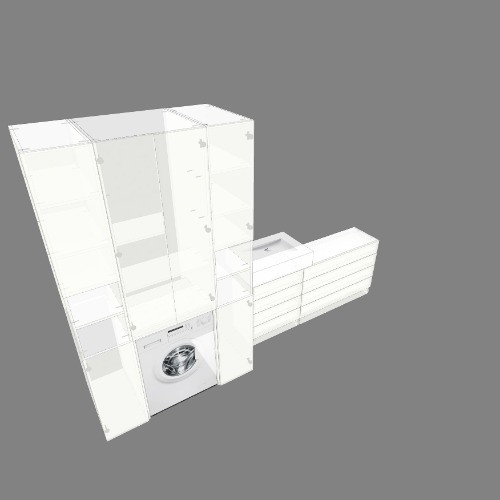
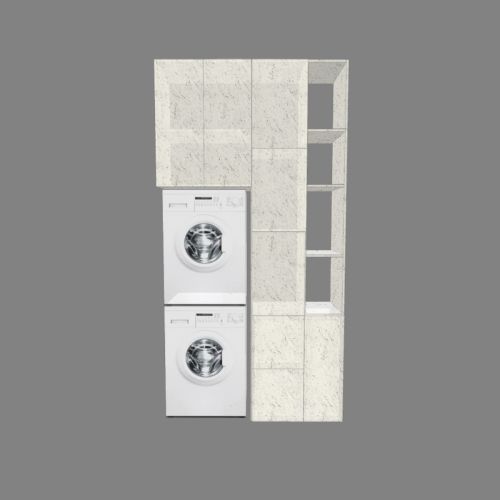
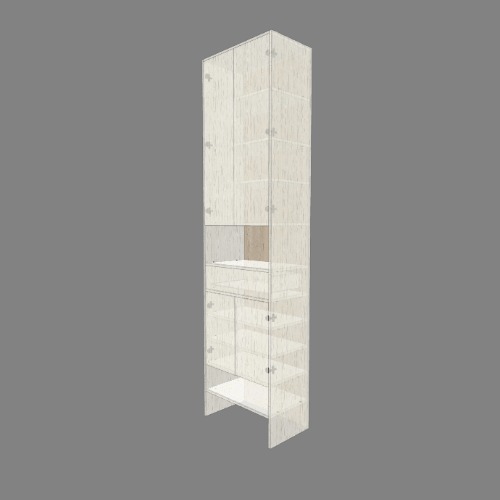
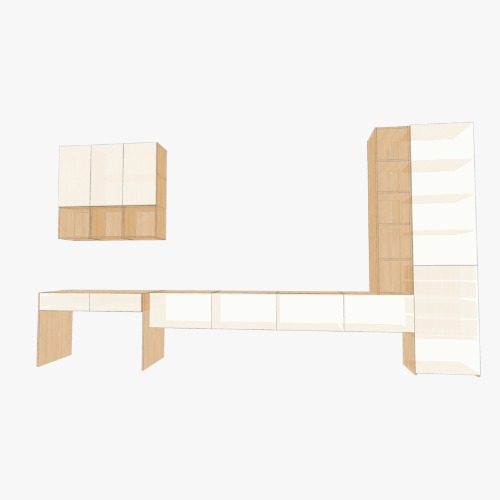
This modern minimalist laundry cabinet design merges clean aesthetics with robust utility for a dedicated laundry area. The L-shaped configuration creates an efficient workspace, blending open shelving with closed cabinetry to accommodate appliances and supplies. The design emphasizes a clutter-free look with a mix of crisp white and warm woodgrain finishes, offering significant laundry room storage ideas and inspiration for a streamlined home.
Construction Details: Laundry Cabinet Plans with Dimensions
The freestanding unit measures 1800mm high, 600mm deep, and 1800mm wide (approximately 71 in H x 23.5 in D x 71 in W). This L-shaped layout includes two vertical segments connected by a continuous 28mm thick countertop, providing a standard work surface height. The design incorporates space for a front-loading washing machine and a utility sink, alongside multiple fixed shelves. These standard cabinet dimensions ensure compatibility with common appliances while maximizing vertical storage.
Materials and Hardware
Construction utilizes 16mm melamine-faced particle board (LDSB) in two finishes: W1000_9 (white textured) and H1145_10 (woodgrain). The project also requires a 3mm particle board (DVP) back panel and a 28mm thick countertop, all in matching white. Three sheets of 16mm board, one sheet of 3mm board, and one countertop slab form the primary materials. The material utilization rate reaches 50.73%, with 54.958 meters of 1x19 mm edge banding applied to visible panel edges.
Assembly Process
Assembly involves cutting all components from the listed sheet goods, with a total cut length of 101.742 meters. Applying the specified edge banding to the 54.958 meters of exposed edges represents a key step before joining the cabinet carcass. The process follows standard cabinet assembly techniques, resulting in a sturdy, freestanding unit.
Adaptation Options
These laundry cabinet plans serve as a comprehensive reference and starting point. The overall dimensions may require adjustment to fit specific room layouts and appliance sizes. Blueprints are available for preview before downloading to help visualize necessary modifications for your space.
Frequently Asked Questions
Q: How can I adjust these plans for a narrower wall?
A: The 1800mm width can be reduced by shortening the horizontal countertop and modifying the shelf widths in the vertical sections. Always verify the final dimensions against your specific appliances, as the blueprint serves as a reference, not a final specification.
Q: What materials and how many sheets are needed to build this?
A: The project requires three sheets of 16mm melamine board (LDSB), one sheet of 3mm particle board (DVP) for the back, and one 28mm thick countertop slab. The finishes are white (W1000_9) and woodgrain (H1145_10).
Q: How complex is the assembly for a DIY builder?
A: The assembly involves standard cabinet construction but requires precise cutting of over 101 meters of board and applying edge banding to 54.958 meters of edges. Experience with a table saw and edge banding tools helps achieve a professional result.
Q: How do I download and use the blueprints?
A: Blueprints are available for preview before downloading. Use them to understand the joinery and layout, but treat them as a starting point, as site conditions may require adjustments to the provided measurements.