Corner Wardrobe: DIY Plans with Dimensions and Assembly
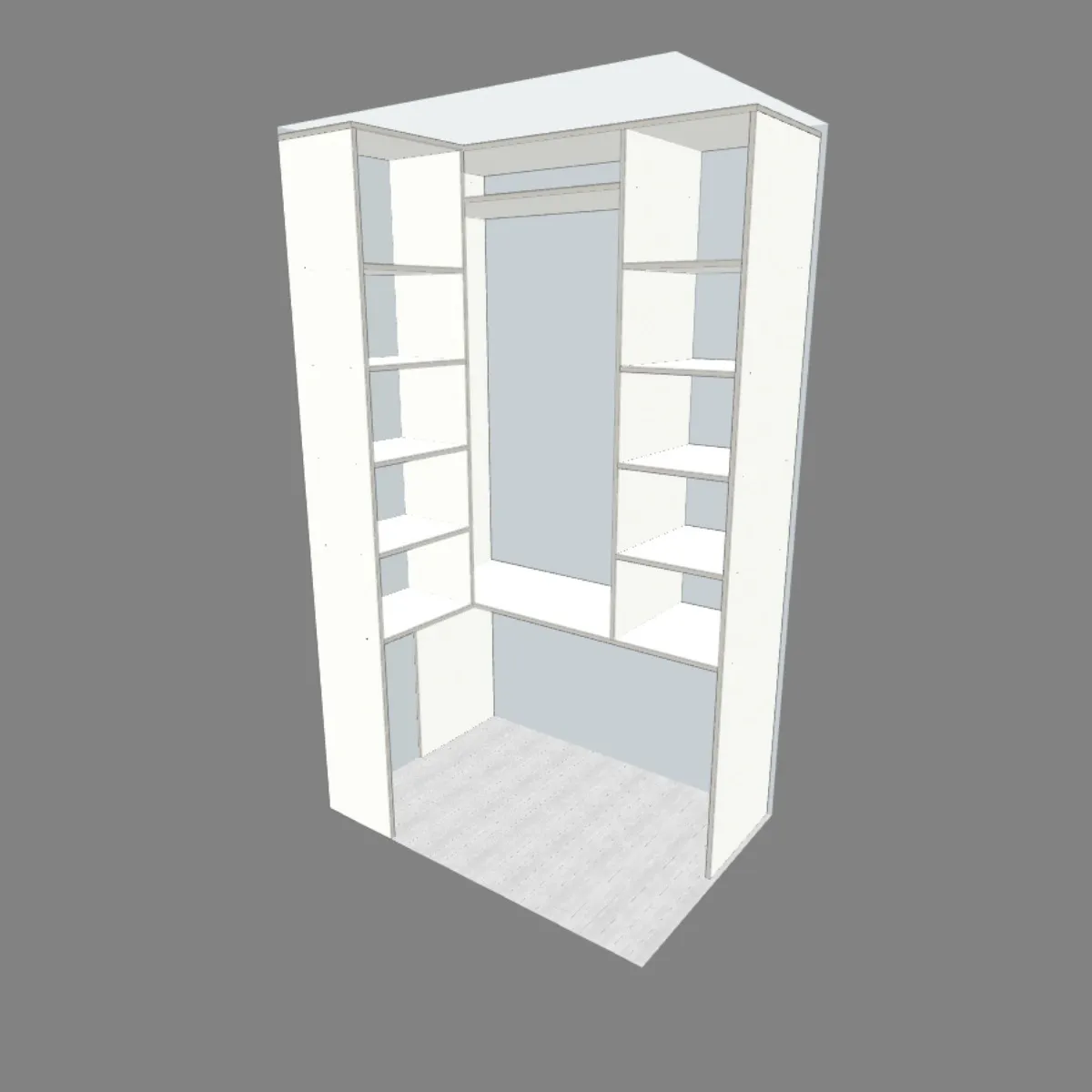
Interactive 3D model: rotate to inspect, open in designer to customize
This project is shared by the community and serves as a reference and starting point. Verify all dimensions and structural correctness before cutting
Total edge banding length - 12.43′ (40.794 m)
Total cutting length - 18.35′ (60.21 m)
| Materials | Hardware |
|---|---|
|
Laminated Particle Board 0.63″x72.05″x108.27″ (16x1830x2750 mm) ( color W1000_9) - 3 pcs. + Edge banding 1 x 19 (U763_9) - 12.43′ (40.794 m) |
Confirmats - 54 pcs. |
Description by Flatma:
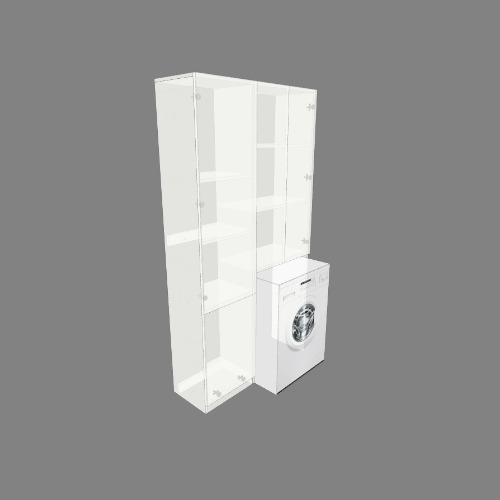
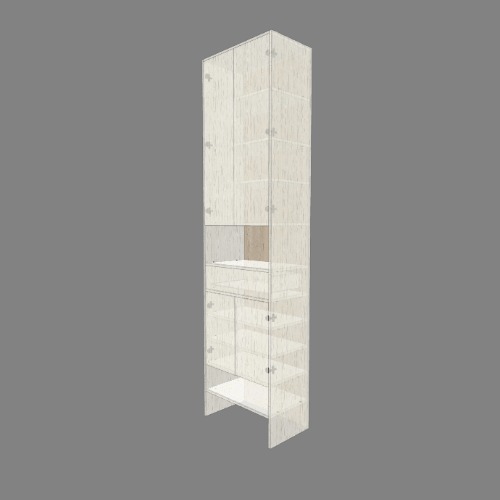
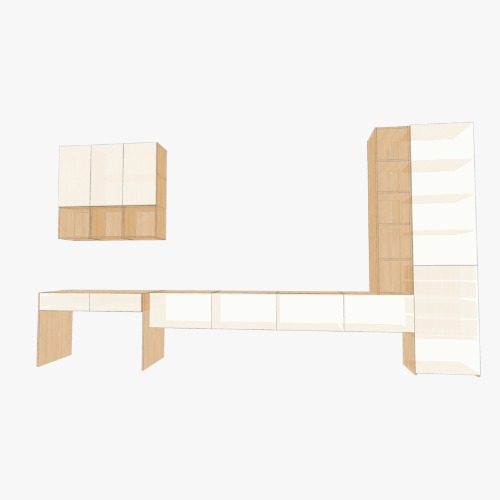
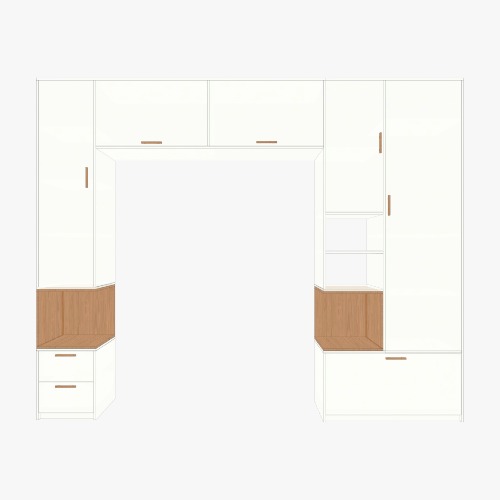
This modern L-shaped corner wardrobe design provides a stylish storage solution for bedrooms and dressing areas, blending contemporary aesthetics with practical organization. The symmetrical layout and mix of open shelving with a dedicated hanging section create a functional focal point for clothing and accessories. Its corner placement makes it an ideal choice for maximizing underutilized space, offering design inspiration for built-in closet ideas and modern wardrobe layouts.
Construction Details: Wardrobe Plans with Dimensions
This wardrobe blueprint features an L-shaped corner design that optimizes reachable storage. The layout incorporates multiple fixed shelves alongside a single hanging rod section, creating zones for folded garments and longer items. While specific dimensions require adjustment for individual spaces, the design follows ergonomic principles for accessible corner storage. Builders should verify standard wardrobe dimensions and closet depth standards for their specific room before finalizing cuts to ensure a proper fit.
Materials and Hardware
Construction calls for three sheets of 16mm laminated particle board (melamine board) in the W1000_9 white textured finish, with each sheet measuring 1830x2750 mm. The project utilizes 40.794 meters of 1x19 U763_9 edge banding to finish all exposed edges. With a material efficiency rate of 58.05%, this plan makes effective use of board stock. The hardware list includes 54 unspecified fasteners, essential for cabinet assembly.
Assembly Process
Assembly involves cutting all components from the three board sheets, resulting in a total cut length of 60.21 meters. Applying the 40.794 meters of edge banding represents a significant portion of the build time, requiring precision for a clean finish. Following a systematic approach to cabinet carcass construction before installing shelves and the hanging rod simplifies the DIY closet assembly process.
Adaptation Options
These wardrobe plans serve as a reference material and starting point for customization. Blueprints are available for preview before downloading, allowing for review of the layout. The dimensions may require adjustment to fit specific site conditions, such as ceiling height or corner angles. Consider altering shelf spacing or converting a section to drawers based on storage needs, using the original design as a functional foundation.
Frequently Asked Questions
Q: How can I adapt these wardrobe plans for a different corner size?
A: Adjust the length of the side panels and shelves while maintaining the L-shaped join. The design’s 58.05% material efficiency provides a benchmark; recalculate sheet needs after modifying dimensions to fit your specific space conditions.
Q: What materials are required to build this corner wardrobe?
A: You need three sheets of 16mm laminated particle board in finish W1000_9. The project also uses 40.794 meters of U763_9 edge banding and 54 pieces of hardware for assembly.
Q: How complex is the assembly process for a DIY builder?
A: The process involves managing 60.21 meters of total cuts and applying edge banding to all exposed edges. Careful sequencing of the cabinet box assembly before installing internal components makes the build manageable.
Q: How do I download and use the blueprints for this project?
A: Blueprints are available for preview before downloading. Use them as a reference for layout and joinery, but remember to verify all measurements against your actual room dimensions, as adjustments are often necessary.